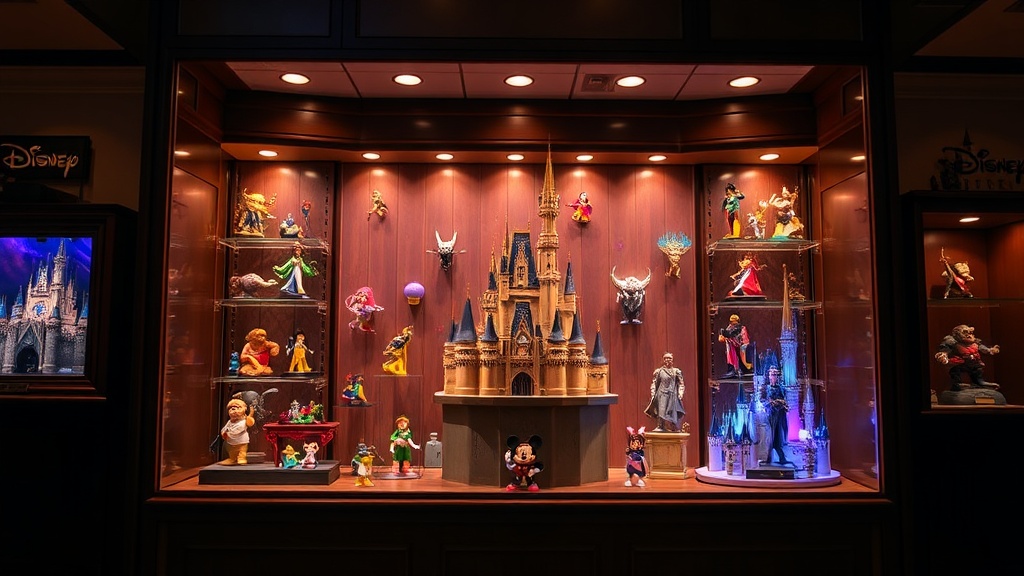
Selecting the Right Lighting for Your Disney Display Cases

A single spotlight hits the gold trim of a limited edition Disney porcelain figurine, making the metallic flakes shimmer against a dark background. Without that light, the piece looks flat, almost dull. Lighting isn't just about seeing your items; it's about how you present your passion to the world. This guide breaks down the technical and aesthetic choices you need to make to illuminate your Disney collections, from delicate pins to heavy vinyl figures.
What Type of Lighting Should I Use for Display Cases?
LED lighting is the best option for most collectors because it produces minimal heat and offers a wide range of color temperatures. Most Disney collectors deal with materials that are sensitive to environmental changes. High-end porcelain, certain plastics, and even some vintage plush items can react to heat or UV exposure. LED bulbs stay cool to the touch, which protects your items from thermal damage.
When you're setting up a display, you have a few different directions you can go. You might want a subtle glow, or you might want a dramatic spotlight. Here are the common types of lighting used in the hobby:
- LED Strips: These are perfect for lining the inside edges of a shelf. They provide even, diffused light that prevents harsh shadows.
- Puck Lights: These are great for creating a "spotlight" effect on a single centerpiece, like a high-value Disney Parks pin or a large figurine.
- Spotlights: These allow you to direct light at a specific angle. This is helpful if you have a deep cabinet where the back corners are dark.
- Micro-LEDs: If you are working with a small-scale display, like a shadow box for Disney pins, tiny fairy lights or micro-LED strands can add a magical touch without taking up much room.
If you're displaying something delicate, like a vintage plush, you'll want to be even more careful. You can read more about material care on the Wikipedia page for Light-emitting diodes to understand why heat dissipation is so important. Heat is the enemy of many collectible materials.
The goal is to create depth. A flat light makes a shelf look one-dimensional. A layered light approach—using both a base light and a directional light—makes your collection look professional.
How Do I Choose the Right Color Temperature?
You should choose a color temperature that complements the specific colors of your collection, typically leaning toward "warm white" for a cozy feel or "cool white" for a modern, crisp look. Color temperature is measured in Kelvin (K). For a Disney collection, you'll likely find yourself choosing between 2700K and 4000K.
Think about the "vibe" of your room. If your display is in a living room with warm-toned furniture, a 2700K light (warm white) will feel natural. If you have a sleek, modern office or a high-tech gaming setup, a 5000K light (daylight/cool white) might look better. However, be careful—daylight bulbs can sometimes make white plastics look a bit blue or clinical.
Here is a quick reference for color temperatures:
| Temperature | Visual Feel | Best For... |
|---|---|---|
| 2700K - 3000K | Warm, yellowish, cozy | Vintage Disneyana, porcelain, and wood-themed displays |
| 3500K - 4000K | Neutral, clean, bright | Modern vinyl figures (Funko Pops, etc.) and mixed collections |
| 5000K+ | Cool, blue, daylight | Highlighting metallic details or very bright, white items |
One thing to watch out for is the "yellowing" effect. If you use very warm lights, your white-based items might look aged. If you use very cool lights, your gold-accented items might look a bit dull. (I've made this mistake more than once with my own shelves!)
If you're displaying something like a Disney Pin collection, the light needs to be bright enough to catch the enamel shine but not so bright that it creates a blinding glare on the metal. You might find official Disney merchandise pages helpful to see how they use lighting in their own retail displays to get inspiration.
How Can I Prevent Damage to My Disney Collection?
The best way to prevent damage is to use LED lights and keep your display away from direct sunlight. UV rays and heat are the two biggest threats to the longevity of your collectibles. UV light can fade the pigments in Disney pins and cause certain plastics to become brittle. Heat can cause certain resins to expand or even crack over time.
It's not just about the light itself, but the placement. If your display case sits right next to a window, the sun will do more damage than any lamp ever could. Even if you have a beautiful display, the sun's rays can bleach the colors out of a plush or a limited edition ornament in a matter of months.
When you're organizing your shelves, consider these tips:
- Use UV-filtering glass: Some high-end display cases come with UV-protected glass. It's worth the investment for high-value items.
- Check your heat: After your lights have been on for an hour, touch the case. If it feels warm, your lights are too close to the items or are generating too much heat.
- Avoid "Hot Spots": Don't point a bright spotlight directly at a single item for 24/7 exposure. This creates a "hot spot" that can cause uneven fading.
If you are currently organizing your Disney vinyl figure collection, you'll notice that the different textures of the vinyl react differently to light. Some are matte, while others are glossy. A matte figure might need more direct light to show its detail, whereas a glossy figure might need more diffused light to avoid a distracting glare.
If you're a collector of plush, you have another layer of care to consider. Light-induced fading is particularly hard on fabric dyes. If you have a collection of Disney plushies, make sure they aren't sitting under high-intensity lights for long periods. You can find more advice on cleaning and maintaining your plush, but remember that light-based damage is often permanent once it happens.
A common mistake is thinking "more light is better." It isn't. Too much light creates "visual noise." If every single item is under a bright spotlight, nothing actually stands out. You want a hierarchy. Your most precious piece—maybe a rare pin or a signed autograph—gets the most focused light. The rest of the collection gets a softer, ambient glow.
Think of it like a movie set. In a movie, the lighting tells you where to look. Your display case should do the same. If you have a shelf full of Disney pins, you don't want a single bright light hitting one pin and making the rest of the board look dark and unappealing. Instead, use a strip of LED light along the top to create a wash of light that covers the whole board evenly.
If you're looking to upgrade your setup, look for lights with a high CRI (Color Rendering Index). A high CRI means the light shows colors accurately. If you use a low-quality LED, your red Mickey Mouse ears might look a bit brownish or orange. A high CRI light will make the colors "pop" just like they did when you first unboxed them.
It's a bit of a learning curve, but once you get the lighting right, your collection will look like a professional museum exhibit rather than just a shelf of stuff. It changes the entire energy of the room.