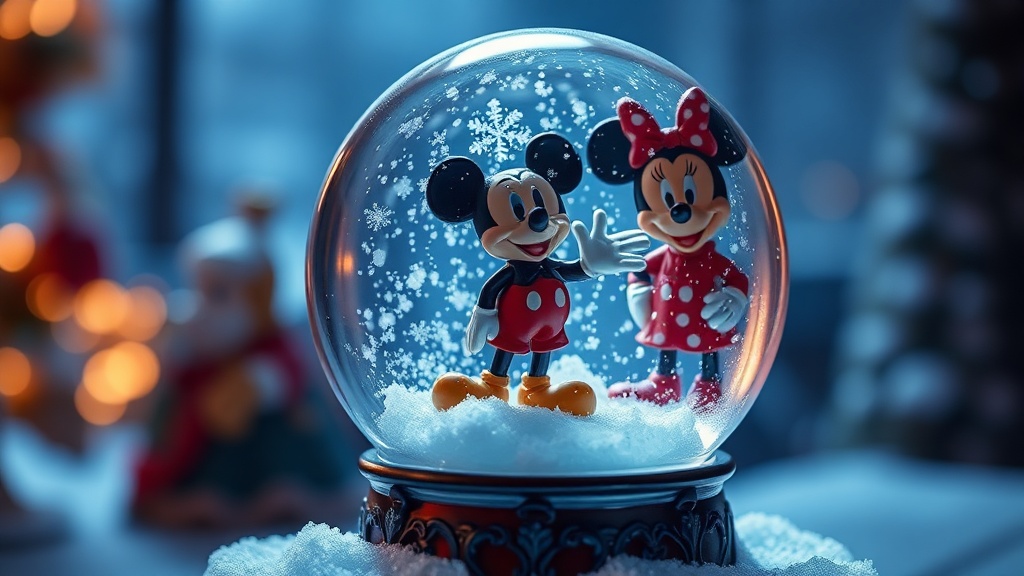
Why Do Disney Snow Globes Turn Cloudy? A Collector's Protection Guide

The Moment Every Collector Dreads
You reach for your favorite Disney snow globe—maybe the one from your first anniversary trip to Walt Disney World, or that limited-edition Nightmare Before Christmas piece you tracked down for months—and something looks off. The water that once sparkled crystal-clear now carries a murky tint. A thin green film clings to the base of the figurine inside. Or worse: there's an air bubble at the top that's grown larger since you last checked. Your heart sinks. That $200 collectible, that irreplaceable memory, is deteriorating before your eyes.
This happens to collectors more often than anyone admits. Snow globes sit on shelves, looking magical, while invisible forces slowly destroy them. Light exposure breaks down the water chemistry. Temperature fluctuations stress the rubber seals. Humidity corrodes the base components. The damage isn't immediate—it's gradual, sneaky, and usually irreversible once it progresses past a certain point. The good news? Understanding what causes deterioration lets you stop it cold.
How Does Light Exposure Damage Disney Snow Globes?
Light—both natural sunlight and certain artificial sources—represents the single biggest threat to snow globe longevity. UV radiation penetrates glass surfaces and triggers chemical reactions in the distilled water and glycol mixture inside. Over months and years, this exposure causes the water to yellow or develop cloudiness. Algae spores (which exist everywhere, even in sealed environments) find fertile ground when light energy becomes available, leading to that telltale green tint collectors dread.
The painted surfaces inside globes suffer too. Mickey's classic red shorts fade to pink. Cinderella's silver gown turns dull gray. These pigments weren't formulated for constant photon bombardment—they're essentially watercolors suspended in a liquid medium, extraordinarily vulnerable to photochemical degradation. Once the original paint chemistry breaks down, no restoration technique brings it back.
Placement matters enormously. A globe sitting six feet from a south-facing window receives enough UV exposure to show noticeable fading within two to three years. Direct sunlight accelerates this timeline to months. Even ambient daylight in a bright room contributes cumulative damage. The solution isn't keeping globes in darkness—that defeats the purpose of collecting—but rather strategic positioning and protective barriers. North-facing rooms offer the safest natural light. Interior walls away from windows eliminate direct exposure entirely. For collectors who want to display near windows, UV-filtering window films block up to 99% of harmful radiation while maintaining visibility.
What Temperature and Humidity Conditions Should You Maintain?
Snow globes exist in a precarious physical state—liquid trapped inside a sealed glass sphere, dependent entirely on the integrity of a rubber gasket between the globe and its base. That gasket responds to temperature the way all rubber does: expansion in heat, contraction in cold. Every cycle stresses the material microscopically. Over years, the rubber hardens, develops micro-cracks, and loses elasticity. Once the seal fails, evaporation begins. Slowly at first—a barely perceptible bubble forming at the top. Then faster, as the compromised gasket allows more air exchange.
The ideal display environment stays between 65-75°F year-round with stable humidity around 45-55%. Basements and attics represent death sentences for snow globes—temperature swings of 30+ degrees between seasons, humidity spikes that encourage mold and corrosion, and the occasional freeze-thaw cycle that can crack the glass itself. Bathrooms seem like logical display spots (decorative, right?) but the heat and humidity from showers create exactly the wrong conditions.
Positioning near heat sources causes localized damage even in otherwise stable rooms. That shelf above the radiator? The globe there experiences temperatures 10-15 degrees higher than the rest of the room. The display case next to the floor vent? Constant warm air movement accelerates seal degradation. Even proximity to electronics—stereo receivers, gaming consoles—generates enough ambient heat to matter over long timeframes. The rule of thumb: if you wouldn't store chocolate there, don't store a snow globe there.
Which Display Cases Actually Protect Your Investment?
Glass display cabinets with UV-filtering properties offer the gold standard for snow globe presentation. Museum-grade glass blocks 98%+ of UV radiation while maintaining optical clarity. The sealed environment also regulates humidity and keeps dust away from the bases—dust that attracts moisture and encourages corrosion of metal components. Some collectors install small silica gel packets in display cases to control humidity, replacing them every few months as they saturate.
Acrylic cases provide a lighter, less fragile alternative, though quality varies enormously. Standard acrylic offers minimal UV protection and yellows over time. Museum-quality acrylic with UV inhibitors costs more but performs comparably to glass. The advantage—beyond weight—is shatter resistance; a dropped acrylic case might scratch, while a glass case sends shattered fragments into your irreplaceable collectibles.
For serious collectors, custom-built display environments with environmental controls represent the ultimate solution. These don't need to be elaborate—an old china cabinet retrofitted with LED lighting, UV-filtering film on the glass, and a small humidity monitor creates a stable microclimate. The American Institute for Conservation emphasizes that stable, moderate conditions matter more than achieving museum-perfect specifications. Your globes don't need a climate-controlled vault—they need consistency and protection from extremes.
How Should You Store Snow Globes You're Not Currently Displaying?
Rotation keeps collections fresh—swap displayed pieces seasonally, store others—but storage done wrong destroys globes faster than display. The fundamental rule: horizontal positioning reduces pressure on base seals compared to vertical stacking. When upright, the liquid's weight presses constantly against the gasket. Lying on their sides (in proper padding), that pressure distributes differently.
Original packaging provides ideal protection when available—those molded styrofoam or cardboard inserts prevent movement and buffer against impacts. Without original boxes, archival-quality storage containers work well. Avoid plastic bins from big-box stores; many off-gas chemicals over time that interact badly with paint and metal. Acid-free cardboard, bubble wrap (not touching the globe surface directly—use acid-free tissue as a barrier), and sturdy outer boxes create safe conditions.
Climate-controlled closets or interior rooms work for storage. Garages, sheds, attics, and basements don't—temperature extremes, humidity fluctuations, and pest risks make these spaces unsuitable for delicate collectibles. Some collectors maintain dedicated "collection closets" with stable environments, rotating pieces in and out of display on quarterly schedules. This approach limits any single globe's exposure to light and environmental stress while keeping the overall collection in active rotation.
Can You Fix a Cloudy or Leaking Snow Globe?
Here's the hard truth collectors need to hear: once a snow globe clouds or leaks, professional restoration is the only fix—and it's expensive, specialized, and not always successful. The sealed nature of these collectibles means no easy opening mechanism exists. Professionals must carefully cut the base, drain and clean the interior, repaint damaged surfaces, refill with proper distilled water and glycol mixtures, and reseal without visible seams. Costs often exceed the globe's market value unless we're talking genuine rare pieces.
DIY attempts usually make things worse. Drilling holes, injecting cleaning solutions, trying to "top off" evaporated liquid—all of these breach the integrity further and accelerate deterioration. That tiny bubble you noticed? By the time it's visible, the seal has already failed significantly. The best approach is prevention: monitoring displayed pieces monthly for early warning signs, maintaining proper environmental conditions, and accepting that some degradation represents the natural lifecycle of these ephemeral objects.
For globes with sentimental value beyond price, professional conservation services do exist—specialists who work with museum collections and high-end private clients. The American Institute for Conservation's Find a Conservator tool helps locate qualified professionals. Expect costs starting around $300-500 for basic work, scaling dramatically for complex pieces. Most collectors find that rigorous preventive care protects 99% of their collection effectively, reserving professional intervention only for genuine heirloom pieces.
Building a Collection That Lasts
Snow globes occupy a unique niche in Disney collecting—more fragile than pins, more ephemeral than figurines, yet possessing a magic no static collectible replicates. The swirling snow, the suspended moment, the way light refracts through liquid and glass—these qualities make them worth the extra care they demand. Smart collectors accept this tradeoff and build their display practices accordingly.
Start with an honest assessment of your current setup. Walk through your display area during different times of day—morning, noon, late afternoon—and note where sunlight falls. Check existing globes for early warning signs: small bubbles, base discoloration, any cloudiness in the liquid. Move pieces away from windows, heat sources, and humidity. Invest in UV protection for unavoidable light exposure. Establish a rotation schedule so no single piece bears constant environmental stress.
The collectors who maintain pristine collections decades later aren't luckier than others—they're more systematic. They notice problems early. They prioritize prevention over repair. They accept that these beautiful, fragile objects require active stewardship rather than passive display. Your snow globes captured moments of Disney magic—vacations, celebrations, personal milestones. Protecting that magic takes effort, but watching that snow swirl around Cinderella's castle or Jack Skellington's pumpkin patch, crystal-clear and perfect years after acquisition? That's the reward.