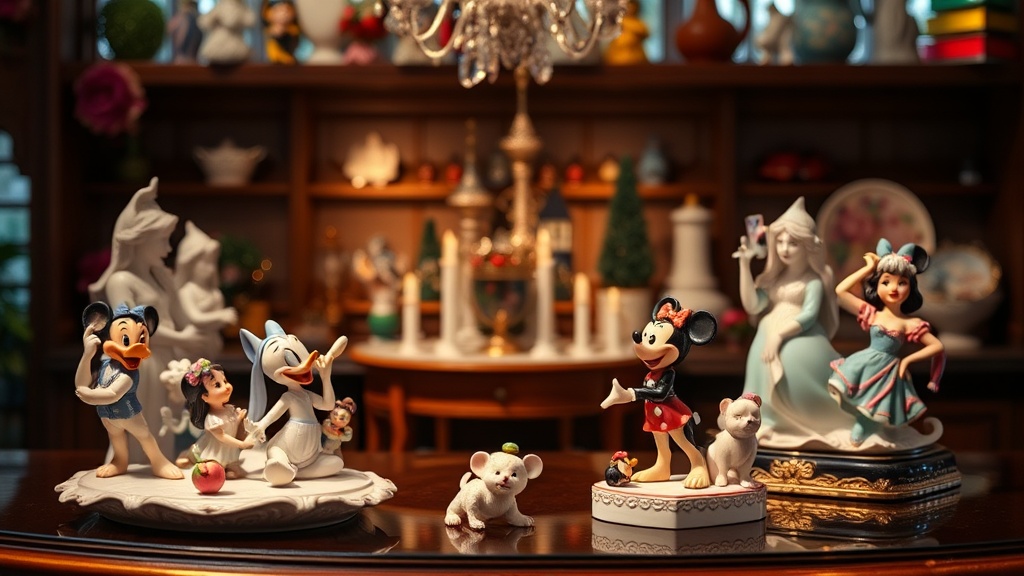
Maintaining Pristine Condition for Disney Porcelain Collectibles

Many collectors assume that because porcelain is a hard, ceramic material, it is virtually indestructible. They believe a quick wipe with a damp cloth is all it takes to keep a piece looking new. This is a mistake. Porcelain is actually quite delicate—not just in terms of physical breakage, but in how it reacts to environmental factors and improper handling. If you aren't careful, you can cause micro-fractures, glaze crazing, or even permanent discoloration. This guide covers the specific methods for cleaning, storing, and preserving your Disney porcelain figurines to ensure they remain museum-quality for years.
The first thing you need to understand is that "cleaning" isn't the same as "preserving." While a standard figurine might be sturdy, high-end Disney porcelain—the kind often found in limited editions or specialty shop releases—has a finish that can be sensitive to chemicals. One wrong move with a harsh household cleaner and you could strip the luster right off the surface. We're talking about long-term value here; a scratch or a dull spot isn't just an eyesore, it's a loss in collectible value.
How do I safely clean Disney porcelain figurines?
When it comes to dust, less is more. You shouldn't be running a heavy cloth over a delicate Mickey Mouse or Belle figurine. Instead, use a soft-bristled brush—think of a high-quality makeup brush or a dedicated anti-static brush—to flick the dust away from the crevices. This prevents you from accidentally knocking the piece over or dragging grit across the glaze. If a piece has stubborn grime, a slightly damp (not soaking!) microfiber cloth is your best bet.
Avoid these common mistakes during the cleaning process:
- Never use abrasive sponges: Even a soft sponge can leave microscopic scratches on the glaze.
- Avoid chemical sprays: Windex or other glass cleaners can react with the paint or glaze on certain porcelain pieces.
- No immersion: Unless the piece is explicitly labeled as waterproof (which most high-end porcelain is not), never submerge it in water.
If you find a piece that has a bit of residue around the base, a gentle solution of distilled water and a drop of mild, pH-neutral soap is the safest route. Always pat it dry with a lint-free cloth immediately after. You don't want water spots to sit on the surface while it dries.
Where is the best place to display my collection?
Location is everything. If you keep your collection in a room with high humidity, like a basement or near a kitchen, you run the risk of moisture seeping into the pores of the ceramic. This can lead to structural weaknesses over time. Similarly, direct sunlight is the enemy of color. While porcelain is more resistant to UV than textiles, the painted details—the eyes, the clothing, the fine lines—can fade if left in a window's path for months on end.
A glass-enclosed cabinet is the gold standard for a reason. It creates a controlled micro-environment. It keeps the dust out (saving you from frequent cleaning) and provides a physical barrier against accidental bumps from pets or people walking by. If you're using LED lighting, ensure they are "cool" lights. Traditional incandescent bulbs emit heat, and over time, that heat can actually affect the stability of the paint or the structural integrity of the piece. You can find great information on light safety for collectors through resources like the Library of Congress digital collections, which often detail preservation methods for physical artifacts.
How can I prevent porcelain from breaking during moves?
If you're moving house or even just rearranging your shelves, you need more than just bubble wrap. Bubble wrap is great for shipping, but for high-end porcelain, it can sometimes leave circular indentations if the bubbles pop or if the material is pressed too hard against a sharp edge. For your most precious Disney pieces, I recommend using acid-free tissue paper to wrap the item first, then layering it with bubble wrap or specialized foam peanuts.
A professional packing method involves:
- The Wrap: Wrap the figurine in multiple layers of acid-free tissue paper to protect the glaze.
- The Cushion: Place the wrapped piece in a sturdy box with plenty of way to absorb shock.
- The Test: If you can feel the object inside the box when you shake it, it's not packed tightly enough. There should be zero movement.
When storing these items long-term, avoid plastic bins that trap moisture. Instead, use acid-free boxes designed for archival storage. This prevents the "musty" smell and ensures that any moisture in the air doesn't settle on the porcelain. For more on the science of material preservation, the Smithsonian Institution offers excellent insights into how various materials age and how to prevent decay.
The goal is to be proactive. Don't wait until a piece is cracked or faded to start thinking about its environment. By treating your Disney porcelain with the same respect a museum treats its exhibits, you're not just keeping a toy on a shelf—you're preserving a piece of history. Whether it's a tiny porcelain Cinderella or a large-scale character figure, the care you put in today determines the quality of your collection tomorrow.